
First Klass Service Guide
Tips from your technician
Straight answers about the systems in your home, from the team that services them.
Four numbers worth knowing
Part 1 of 7
Cooling
Okanagan summers are long and hot, so a system that kept up last year can struggle this one.
14 to 19+SEER2
The Canadian minimum through to the top of the range. Where a unit lands follows how finely it stages.
SEER2 rating
Your AC runs on the furnace blower, so a high-efficiency AC on an aging furnace drags the whole rating down.
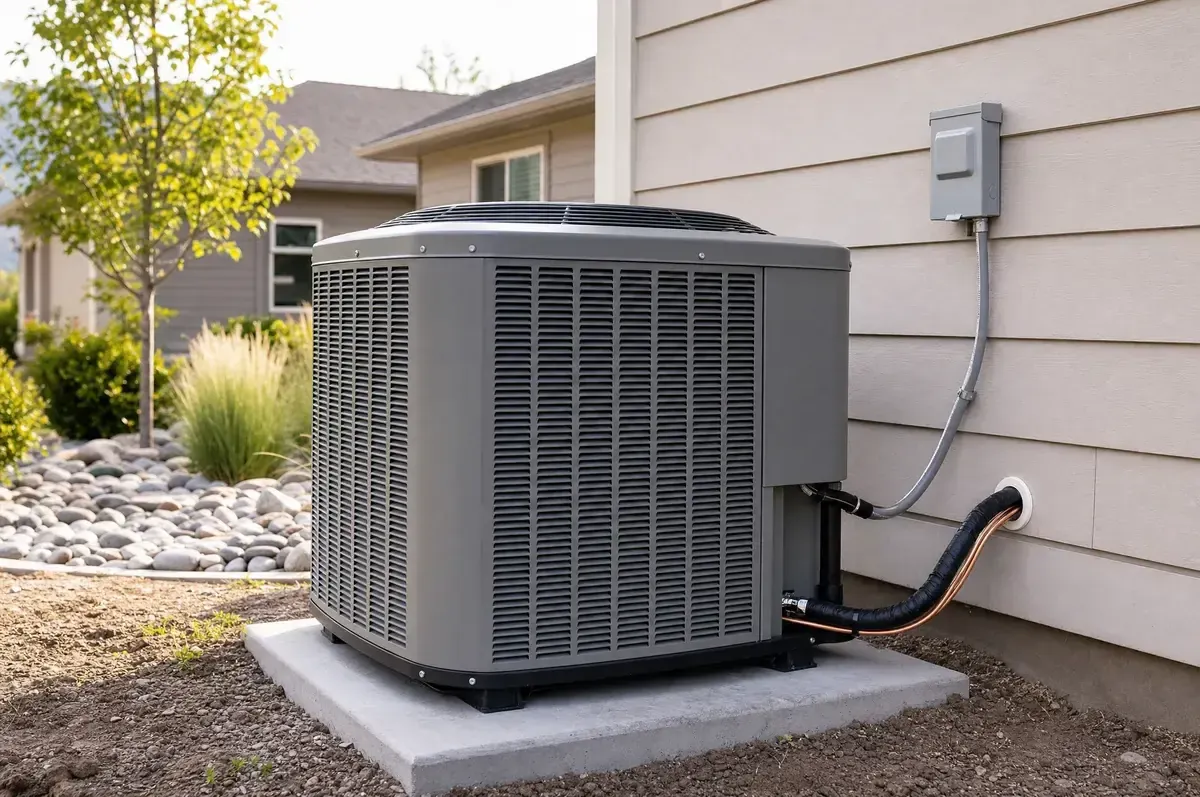
New AC installation and replacementRight-sized cooling that holds temperature through an Okanagan July, matched to the furnace blower that has to move all that cold air.
Why it matters
Your AC does not have its own fan. It uses the furnace's indoor blower to push cooled air through the house, so the two units work as one system. Pairing a high-efficiency AC with an aging furnace drags the whole rating down, and modern variable-speed units need a modern, high-efficiency blower to work right.
When it makes sense to do both
- Matching age: both units usually last 15 to 20 years, so one failing means the other is close behind.
- Lower labor: one trip, one setup, one crew, instead of paying for the same access twice.
- Fresh warranties: both clocks start together, so you do not end up with a coverage gap later.
Quality tiers
- Single-stage: full output or off, cheapest to buy, louder, with bigger temperature swings.
- Two-stage: a low setting for mild days and full capacity for peak summer heat.
- Variable-speed inverter: adjusts in small increments to hold an exact temperature quietly.
- Efficiency follows staging: 14 SEER2 at the Canadian minimum, up to 19+ SEER2 at the top.
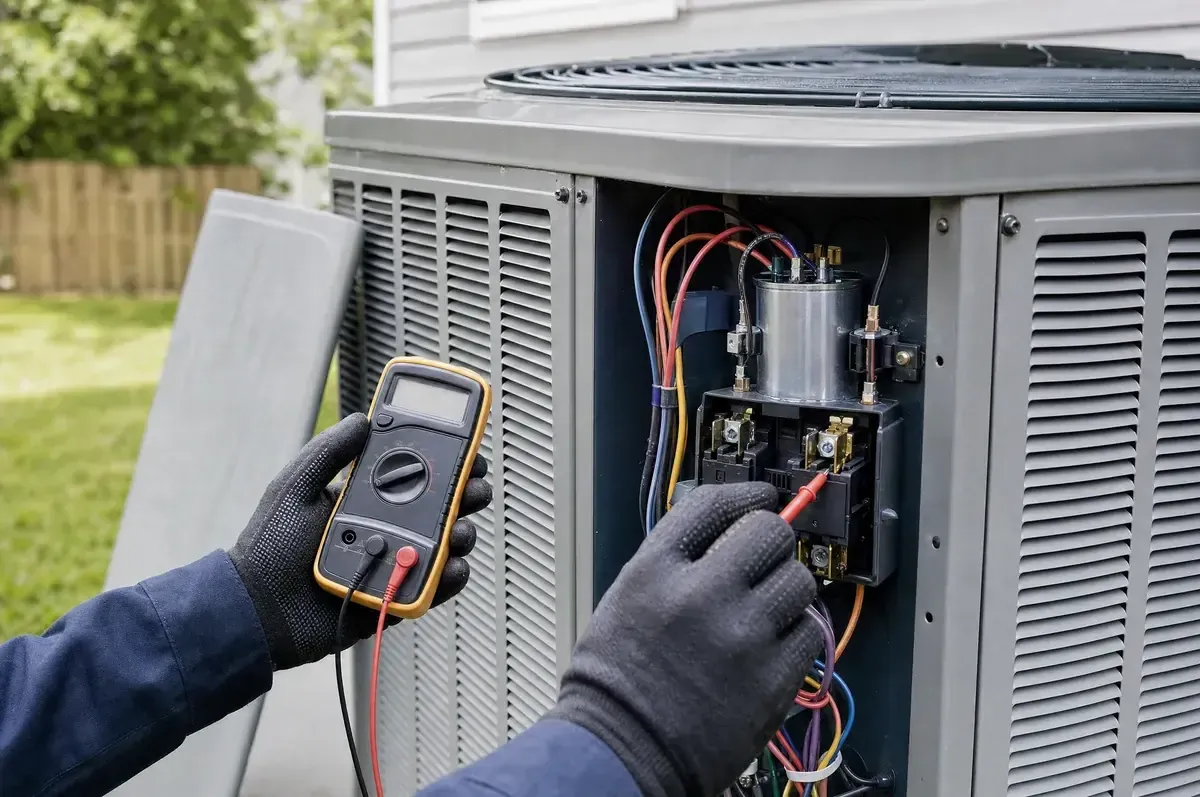
AC repair and troubleshootingWe find the actual fault, price the repair before we start, and tell you straight when an old unit is not worth fixing again.
Check this first
Before you book anything, pull the air filter and look at it. A dirty filter is the most common cause of home AC problems: it starves the system for airflow, cuts cooling, and can freeze the indoor coil. If the filter is grey and packed, change it and give the system an hour.
Signs you need this
- Won't turn on: usually a tripped breaker, dead thermostat batteries, or a failed start capacitor.
- Weak or no airflow: a clogged filter, a blocked return, or a failing blower motor.
- Warm air blowing: low refrigerant, a dirty outdoor coil, or a compressor that is not starting.
- Strange noises or odors: loose hardware, a worn motor bearing, or mold in the ductwork.
- Refrigerant leak: ice on the lines and weak cooling, and topping it up without a repair just leaks again.
Good to know
We diagnose first and give you the price before we pick up a tool. If a unit is near the end of its 15 to 20 year life and the compressor is failing, we will show you the replacement numbers too, so your money goes where it does the most good.
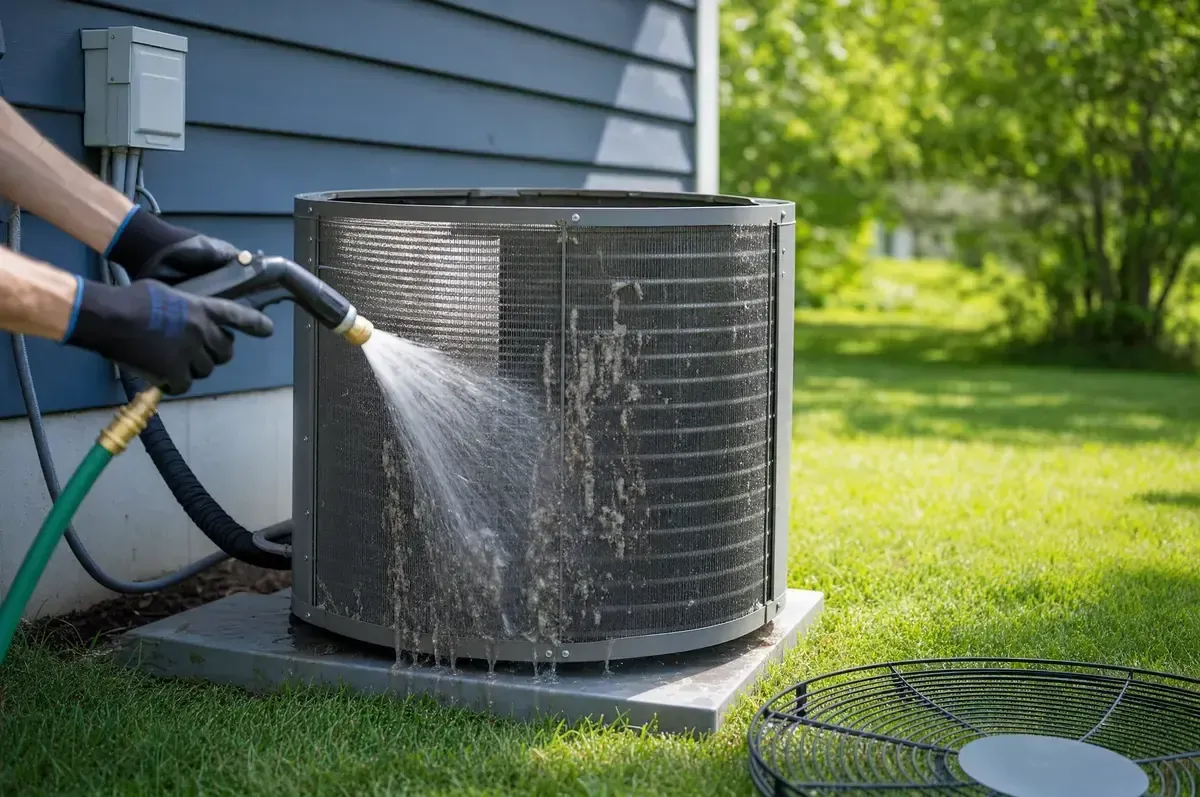
Preventative maintenance and tune-upsA spring tune-up catches worn parts and low refrigerant before the first heat wave, when every HVAC company in Kelowna is already booked.
What's included
- Change the air filter: the one part standing between your blower and clean airflow.
- Check the vents: closed or blocked registers make the whole system work harder.
- Clear the drain line: a plugged condensate line backs water up into the house.
- Clear debris, clean the fins and coils: a dirty outdoor coil cannot dump heat.
- Check level, pressure and voltage: the numbers that show a part is on its way out.
What you can do between visits
Two jobs are yours. Change or clean the air filter every 30 to 90 days, sooner if you have pets or the smoke rolls in. Once a year, clear dirt, grass clippings and leaves off the outdoor condenser coil, and keep shrubs and stored gear back from it.
Why it matters
Book it in spring. By the first heat warning every HVAC company in the valley is running flat out, and a part that would have been a scheduled swap in April becomes a hot afternoon with no cooling in the house.
Part 2 of 7
Heating
Your furnace does almost all of its work in a few cold months, and it usually gives you warning signs first.
95%AFUE
A 95% AFUE furnace turns 95 cents of every gas dollar into heat in your home. What changes the comfort is how low it can run.
Output while it is running
Book the furnace check in early fall, before the first cold snap.
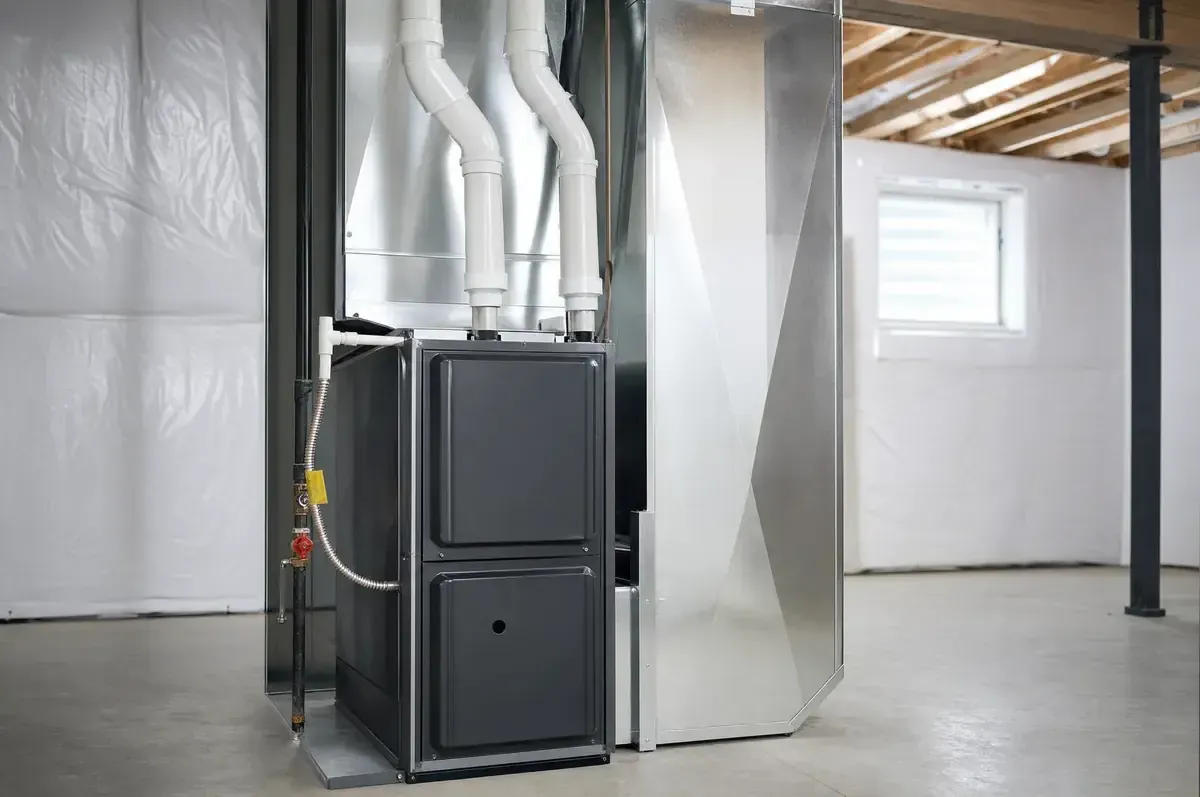
Furnace installation and replacementSingle-stage, two-stage or modulating: we walk you through the tiers, size the furnace to your home, and install it right the first time.
Quality tiers
All three tiers will keep you warm. What changes is how even the house feels and what it costs to run.
- Budget single-stage: runs at 100% whenever it is on, around 95% AFUE, with minor temperature swings.
- Mid-tier two-stage: switches between high output and about 65% low to balance comfort and fuel use.
- Premium modulating: variable-speed blowers adjust output in 1% to 5% steps for steady heat and quiet operation.
Why we ask about your AC
Your air conditioner uses the furnace indoor blower to push cold air through the house, so the two run as one system. Pairing a new high-efficiency AC with an old furnace drags the whole rating down, and a modern variable-speed AC needs a modern blower.
- Lower labor: one trip covers both units, so you pay setup and labor once.
- Matching age: both usually last 15 to 20 years, so if one is failing the other is close behind.
- Fresh warranties: starting both together prevents a coverage gap a few years from now.
Good to know
We size the furnace to your home instead of copying the old nameplate, then vent it, connect the gas and commission it before we leave. Tell us how long you plan to stay and we will tell you which tier pays off.
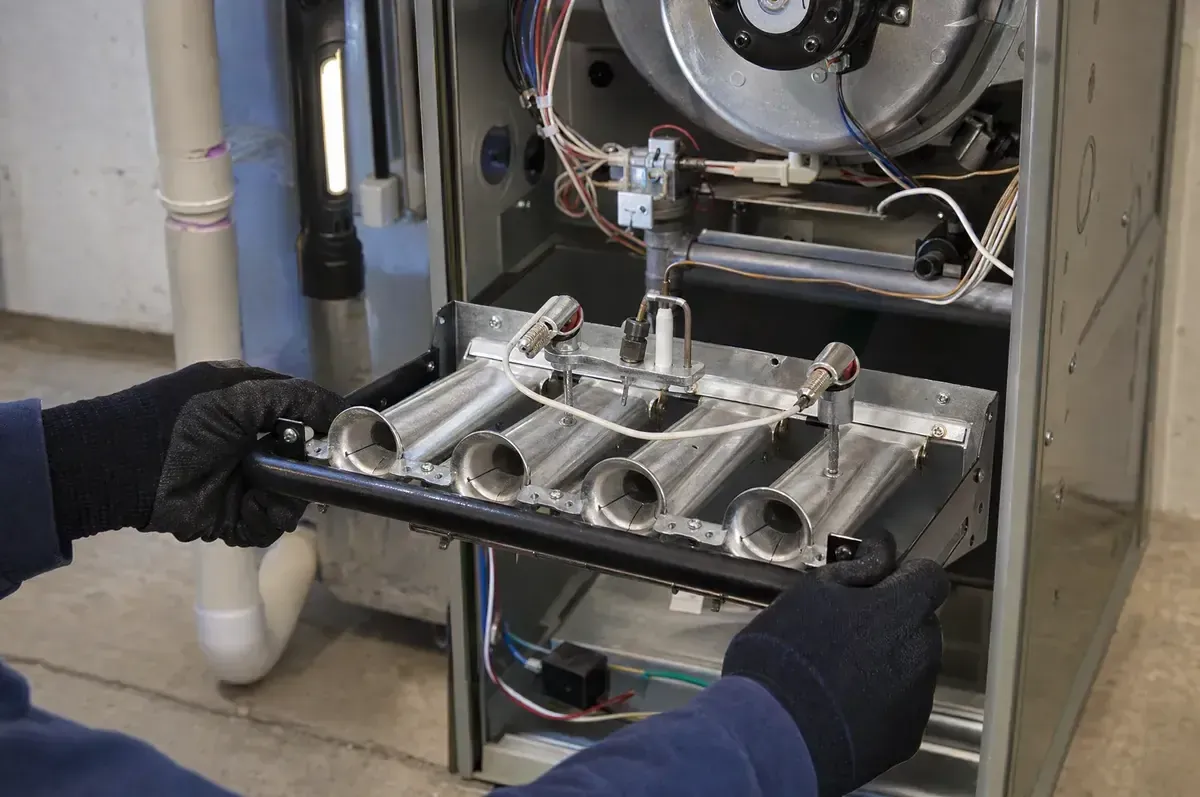
Furnace repair and maintenanceNo heat, short cycling, or a furnace that will not stay lit: we find the root cause, then keep it running with an annual tune-up.
Signs you need this
- No heat: nothing at all, or it quits on the coldest night of the year.
- Short cycling: the furnace starts and stops every few minutes instead of finishing a cycle.
- Will not stay lit: it fires, runs a moment, then shuts down and tries again.
- Blowing cold: the fan runs but the air coming out is not warm.
- Unusual noise: banging, screeching, or a rumble when the burners light.
What a First Klass tune-up covers
A high-efficiency gas furnace needs a yearly professional checkup to keep burning clean, venting safely and running at the efficiency you paid for. Book it in early fall, before the first cold snap.
- Clean and service: burners and flame sensors cleaned so the furnace lights every time.
- Combustion test: we check how the furnace burns and inspect the heat exchanger.
- Carbon monoxide test: the one check nobody should skip on a gas appliance.
- Gas check: gas components and supply pressure tested.
- Safety inspection: venting, controls and voltage checked before the cold weather arrives.
Why it matters
A cracked heat exchanger can put carbon monoxide into the air you breathe, and a furnace nobody has serviced tends to fail on the coldest night. Most of what we find at a tune-up is cheap to fix in October and expensive in January.
Filter replacement and cleaningThe cheapest thing you can do for your furnace: the right filter, the right thickness, and a schedule you will actually keep.
Why it matters
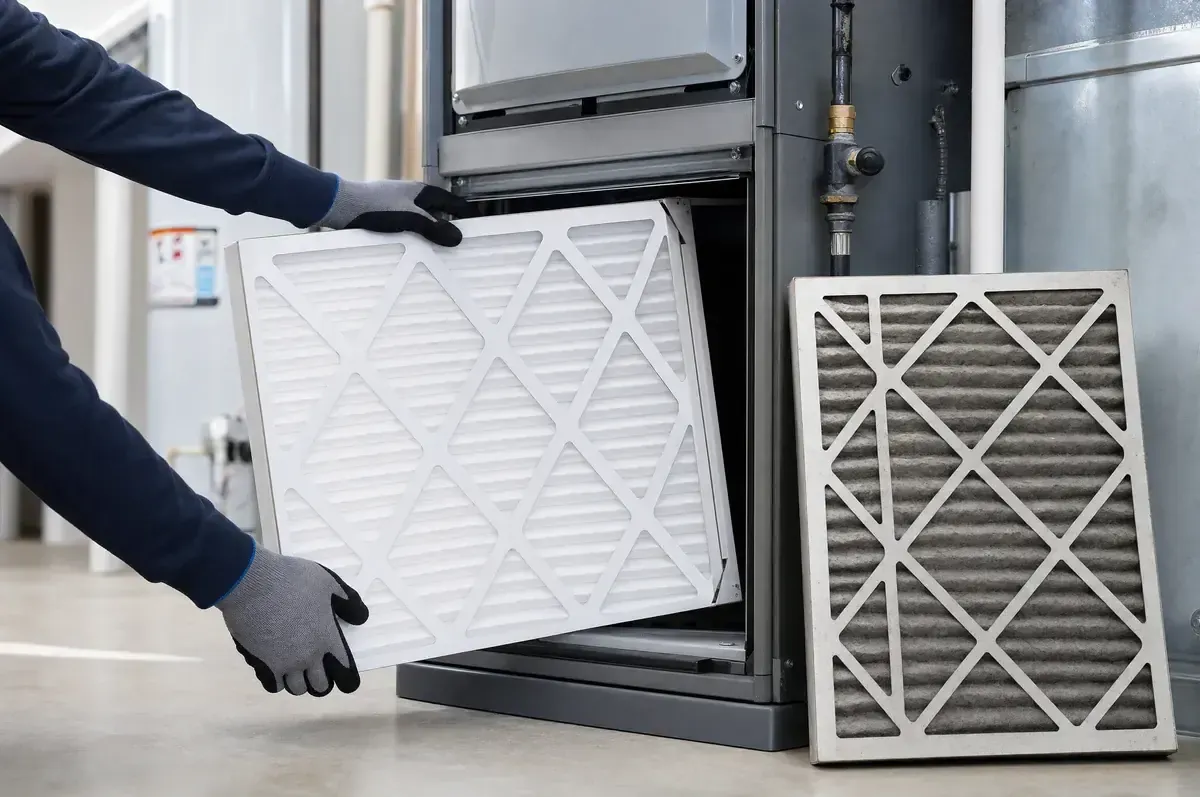
A clogged filter starves the furnace for air. The blower works harder, the heating bill creeps up, far rooms go cold, and the heat exchanger runs hotter than it was designed to. A dirty filter is the most common cause of home air conditioner problems, and it is just as hard on a furnace.
What you can do yourself
- Change the air filter every 30 to 90 days, sooner with pets or renovations.
- Clean the vents and registers, and keep furniture and rugs off them.
- Write the date on the edge of the filter so you are not guessing next time.
- Check it monthly during a cold snap, when the furnace runs the most.
Good to know
The right filter is not always the thickest one. A dense filter on a system that was not designed for it restricts airflow just like a dirty one does. We will tell you the size, the thickness and the rating your furnace can actually handle, and where to get them.
Part 3 of 7
Heat Pumps
A heat pump cools all summer and heats most of the winter, which is why so many Kelowna homes are adding one.
1system
A heat pump cools all summer and heats most of the winter. The furnace only has to cover the deep cold.
From mild days to a cold snap
FortisBC rebates may apply, and we are an HPCN member, so the paperwork is handled here.
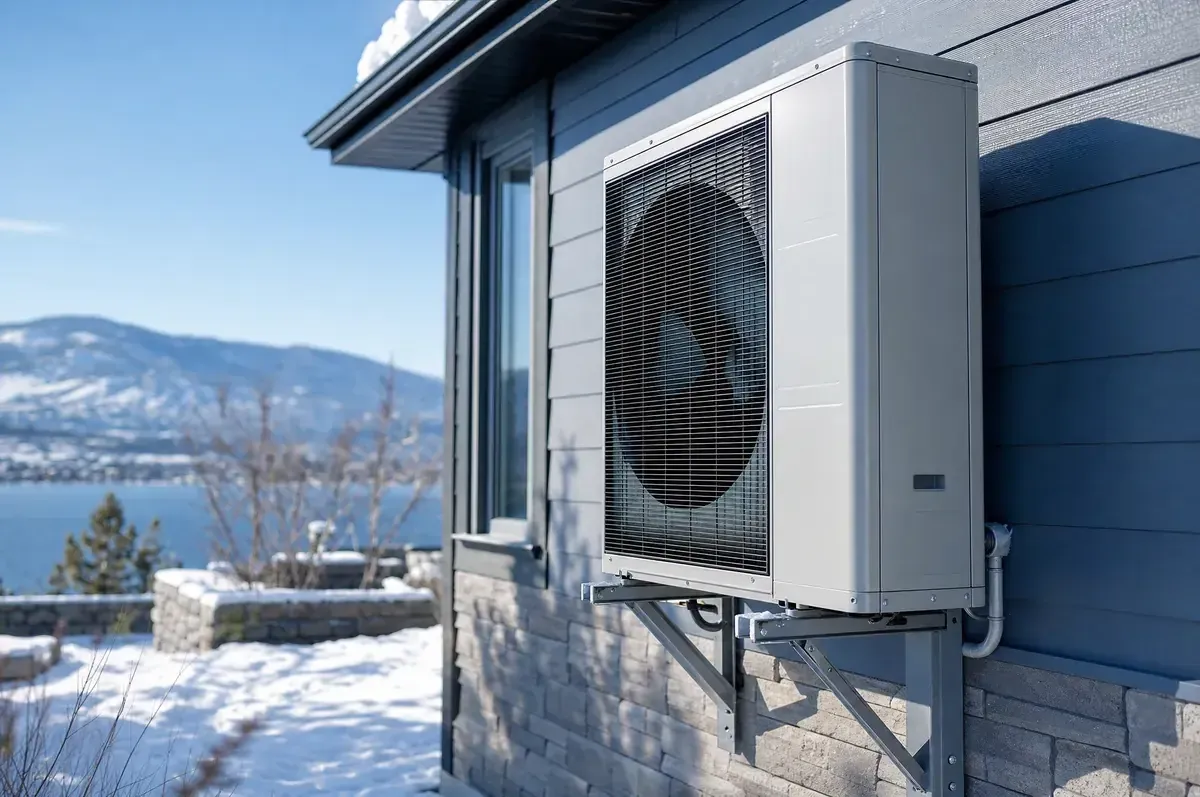
Heat pumps & hybrid systemsOne system that cools all summer and heats most of the winter, with the furnace covering cold snaps, and FortisBC rebates may apply.
How it works
- Moving heat: refrigerant carries heat from the outdoor air into the house, and back out in summer.
- High efficiency: moving heat takes far less energy than burning fuel or running electric heat.
- Air source: the common type for homes, pulling heat straight from the outdoor air.
When it makes sense
- Old equipment: your furnace or AC is near the end of its life anyway.
- Oil or propane heat: switching away from expensive fuel saves the most.
- Heat only home: you want cooling too, from one system instead of two.
- Rebates and solar: FortisBC rebates may apply, and it pairs well with solar you already generate.
When it does not
- Poor insulation: a drafty house loses heat faster than a heat pump can add it.
- Nearly new furnace: not practical to replace equipment that is working perfectly.
- Maxed out panel: an electrical upgrade can cost more than the system saves.
- Cheap gas, costly power: the monthly operating cost can go the wrong way.
Good to know in Kelowna
Our winters do drop below freezing, and standard models lose ground in that weather. Here the answer is usually a cold-climate model, or a hybrid: the heat pump handles the mild months and your gas furnace takes the cold snaps. We are an HPCN member contractor, so we help you file the FortisBC paperwork.
Part 4 of 7
Plumbing
Most water damage starts as something small behind a wall, so it helps to know what your home is built with.
40 to 60psi
The range we aim for, with 50 psi the number we set a regulator to.
- Weak
- under 40
- Ideal
- 40 to 60
- High
- 60 to 80
- Damaging
- over 80
Over 80 psi damages pipes, joints and appliances, and is a code violation in most of the valley.
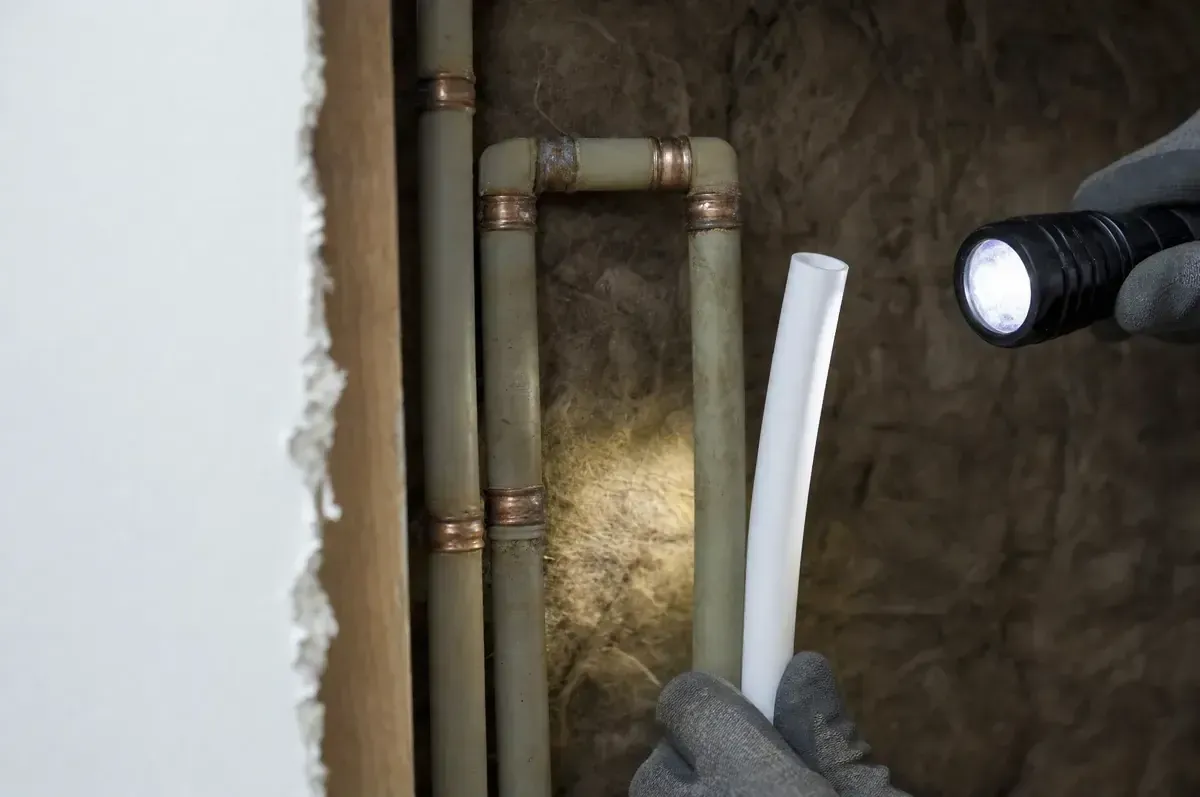
Poly-B pipe replacementGrey polybutylene pipe fails without warning and can cost you your insurance. We repipe homes in PEX with minimal drywall damage.
How to spot it
- Grey flexible plastic pipe, usually joined with copper or plastic crimp fittings
- Often visible near the water heater, or where the supply enters the home
- Common in Okanagan homes built from the late 1970s through the mid 1990s
- Sometimes printed on the pipe itself, though dust and paint tend to hide it
Why it fails
Polybutylene breaks down chemically when it meets oxidants like the chlorine in municipal water. The grey plastic turns brittle, develops internal stress fractures, and eventually leaks or bursts without warning. Systems installed between the late 1970s and the mid 1990s are now well past the 10 to 15 year functional lifespan the material was built for.
Why it matters
- Failures happen behind finished walls and ceilings, so rot and mold set in first
- Many insurers refuse coverage or deny water damage claims on active Poly-B
- Whole home replacement estimates typically run $3,000 to over $25,000 depending on the house
- Replacing it settles the insurance question before a sale, not during one
What replacement involves
- We repipe the home in PEX and leave the old Poly-B abandoned in place
- Strategic drywall openings rather than stripping every wall in the house
- Water is typically off for the working day while we make the changeover
- Openings are patched at the end of the job, ready for paint
Water pressure optimizationWeak showers and banging pipes usually trace back to a regulator or a half closed valve. We measure it and fix the cause.
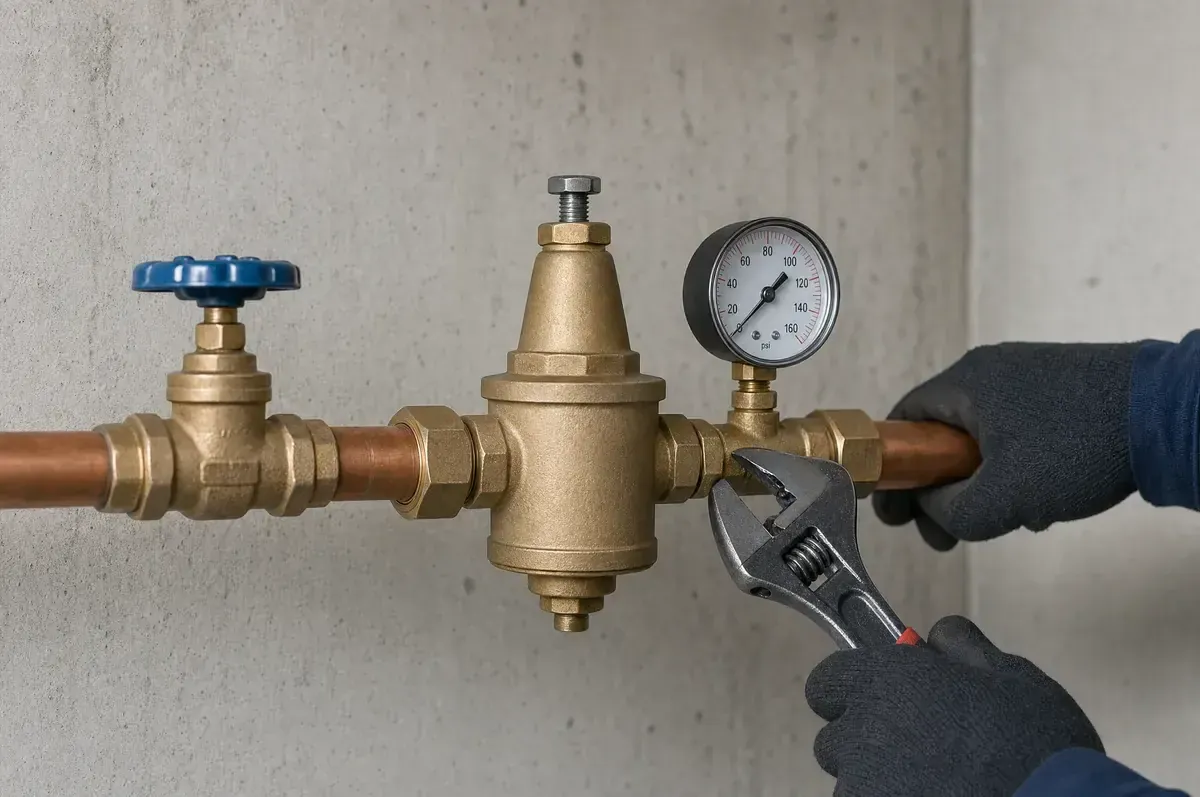
Pressure guidelines
- Ideal range: 40 to 60 psi, with 50 psi the number we aim for
- Minimum: 20 to 30 psi is the functional floor, and under 40 psi feels weak
- Maximum: 80 psi is the upper limit in most building codes
Why the limits matter
- Under 40 psi: weak showers, and washers and dishwashers that run poorly
- Over 80 psi: damage to pipes, joints and appliances, and often a code violation
- Pressure that swings through the day usually means a worn regulator
How the regulator works
A pressure reducing valve, or PRV, sits on the main supply line just after the main shut off, where water enters the house. Municipal systems can push well over 150 psi. Inside that bell shaped brass valve, a spring loaded diaphragm adjusts to balance the incoming pressure and hold a steady household range.
Good to know
- A gauge test takes minutes, ask for one during any visit
- Pipes that bang when a tap closes often point at pressure, not the tap
- A regulator is a wearing part, not a permanent fixture
Pipe installation and replacementNew water and drain lines for renovations, additions and failing systems, sized properly and installed to BC code.
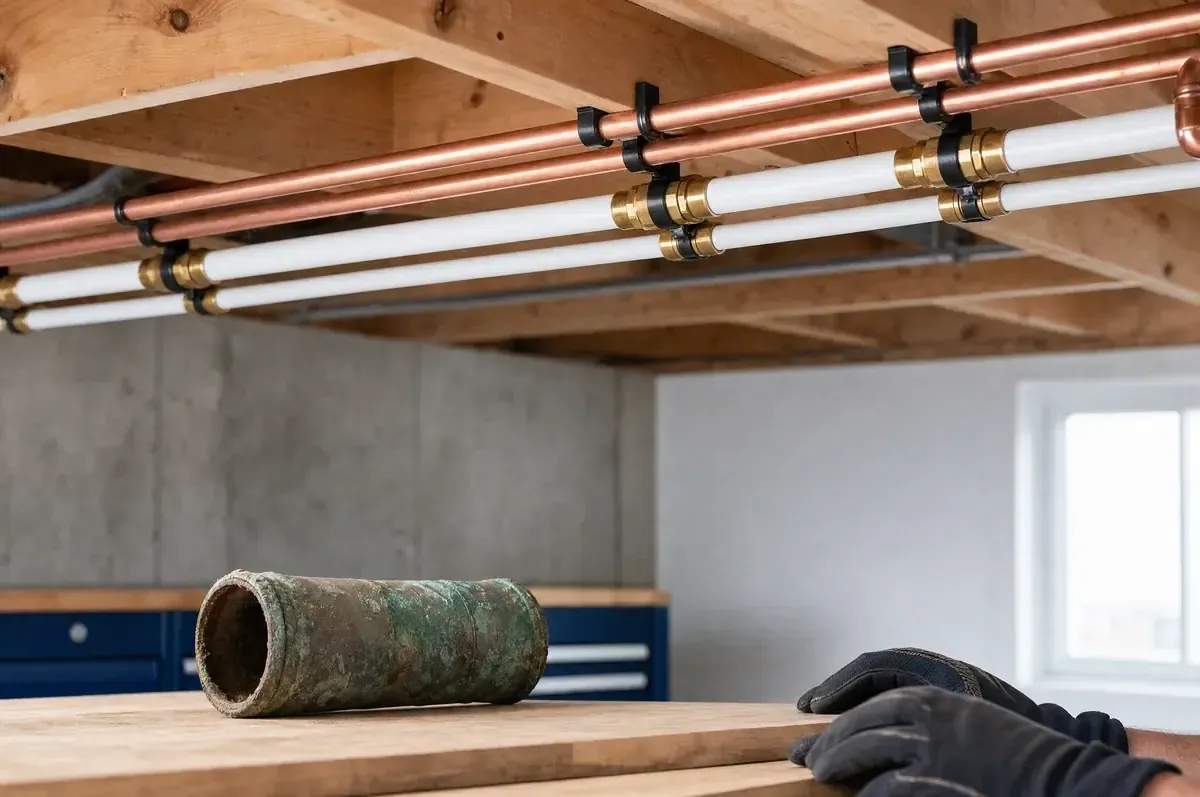
How long copper lasts
Copper often lasts 30 years or more, sometimes 50, depending on water quality and pipe type. Acidic water with a low pH, or the hard water common around the Okanagan, corrodes it from the inside out. Thicker walled Type L outlasts thinner Type M, and pressure over 80 psi stresses joints and walls.
Signs of failure
- Pinhole leaks or tiny drips around fittings
- Green stains on the pipe or on nearby drywall
- Reduced flow caused by mineral buildup inside the line
- Repairs that keep coming back in a different spot each time
What we install
- PEX for most repipes: flexible, freeze tolerant and quick to route
- Copper where the run is exposed, or where you want it to match
- Correct grounding and clean joints, which slow electrochemical corrosion
- Lines sized to the fixture count so pressure holds up at every tap
Fixture installation and repairTaps, toilets, tubs and shower valves installed level, sealed properly, and tested before we pack up.
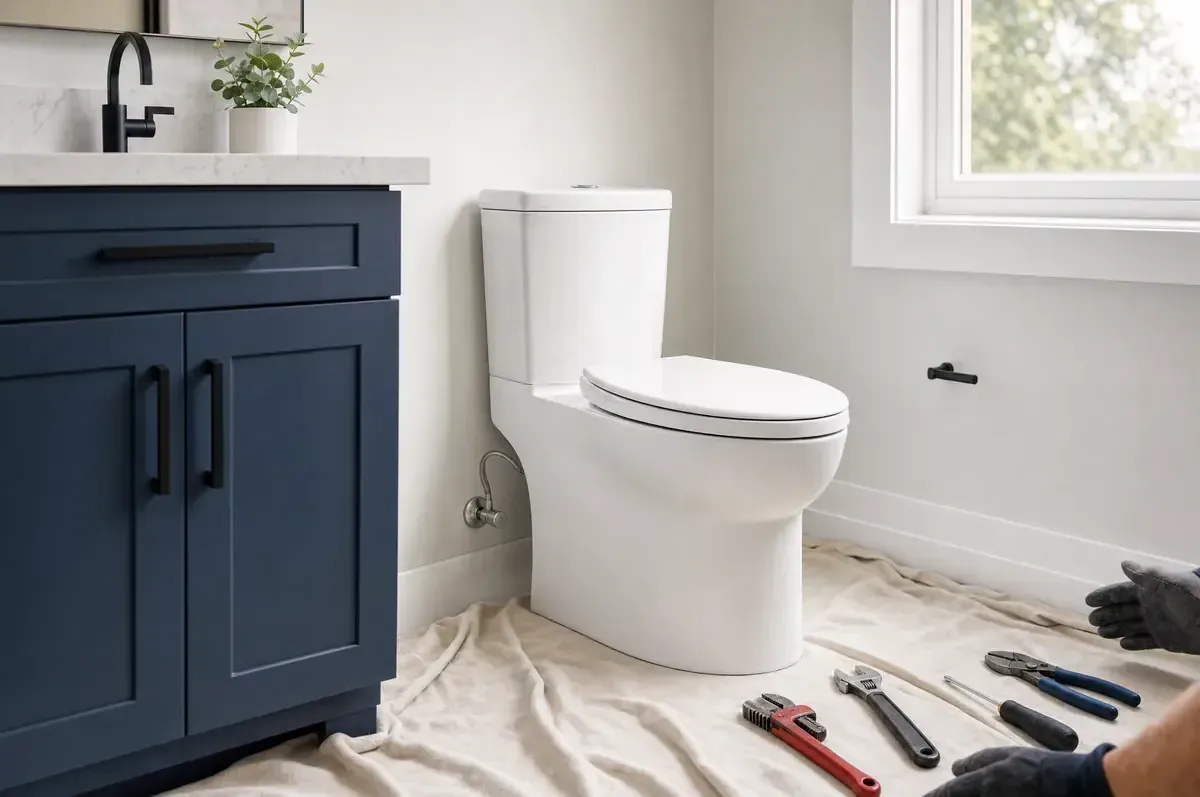
When a toilet is worth replacing
- Hairline cracks in the tank or bowl leaking slowly into the subfloor
- Pre 1990s models using up to 5 gallons per flush against 1.28 or less
- Mineral scale in older unglazed traps restricting flow and causing clogs
- Constant flapper, fill valve and gasket repairs costing more than a new unit
- Comfort height and elongated bowls for anyone who finds the old one low
What else we install
Kitchen and bathroom faucets, shower and tub valves, sinks, laundry boxes and hose bibs. We check that the shut off under the fixture actually closes before we start, because a seized valve turns a simple swap into a much bigger job.
Good to know
- A rocking toilet is usually a failed wax seal, not just a loose bolt
- Old fixtures on hard water hide scale you only see once they come off
- Replacing the supply lines and shut offs with the fixture avoids a callback
Part 5 of 7
Gas
Gas work is safety work, and a few simple checks keep every appliance in your home running the way it should.
Oncea year
A gas fireplace needs annual service. The pilot, the venting and the glass all need a look before winter.
- 1Carbon monoxide tested and the venting confirmed
- 2Burners and flame sensor cleaned so it lights first try
- 3Glass and gasket inspected and resealed
- 4Findings in writing, sorted into now and later
Most fireplaces run hard all winter and then sit untouched all summer, which is when the dust settles in.
Gas appliance installationRanges, dryers, patio heaters and barbecue outlet boxes connected, tested and commissioned by our licensed gasfitters.
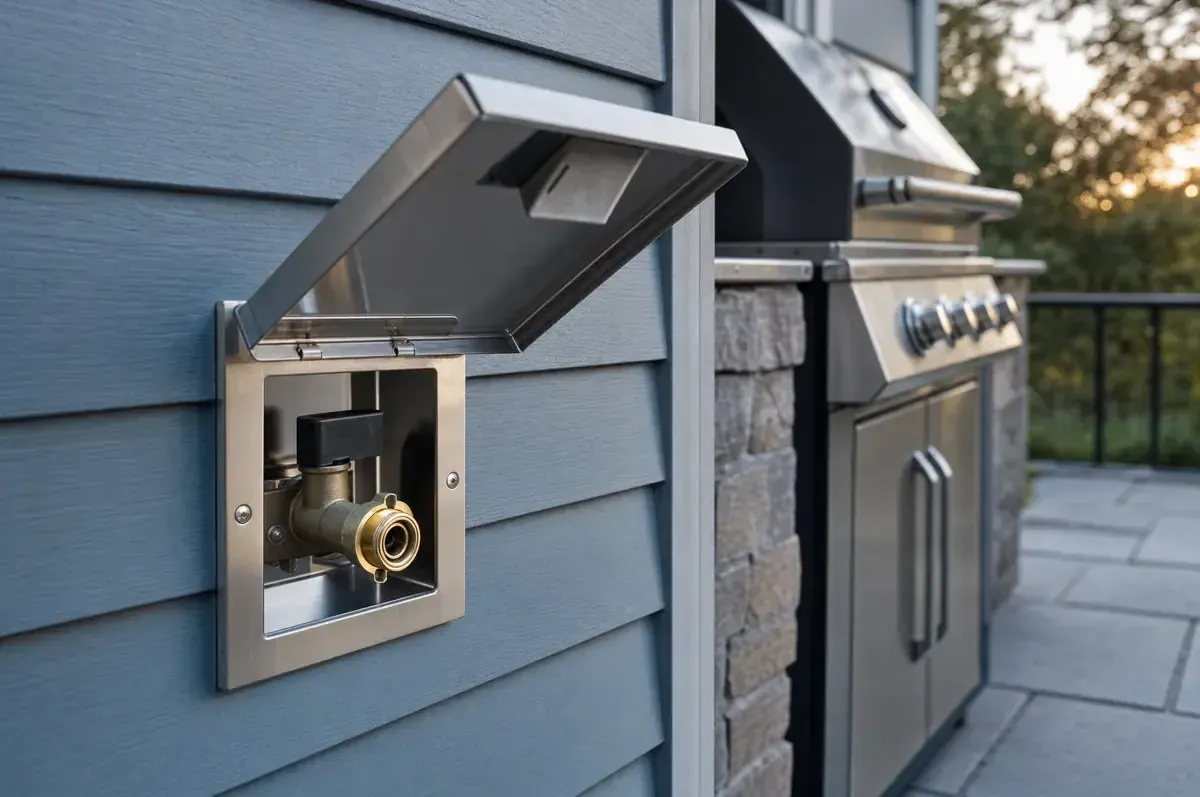
What's included
- Ranges, dryers, patio heaters and garage heaters tied into a properly sized line.
- Outdoor barbecue outlet boxes with a quick connect for natural gas or propane.
- A shut-off valve, an approved connector and a leak check at every connection.
- Pressure testing and permits where the code requires them.
- Venting and clearances confirmed before we hand the appliance over.
Sizes and fit
A standard surface mount barbecue outlet box runs about 8.5 by 5.25 by 2.25 inches, and there are smaller compact and recessed sizes as well. Requirements vary from one barbecue to the next, so a new grill sometimes needs a different box. Send us the model and we will confirm the fit first.
Good to know
- A quick connect lets you unhook the barbecue for cleaning or winter storage.
- Natural gas and propane appliances are not interchangeable without the right conversion.
- Older flexible connectors get replaced whenever we move or reinstall an appliance.
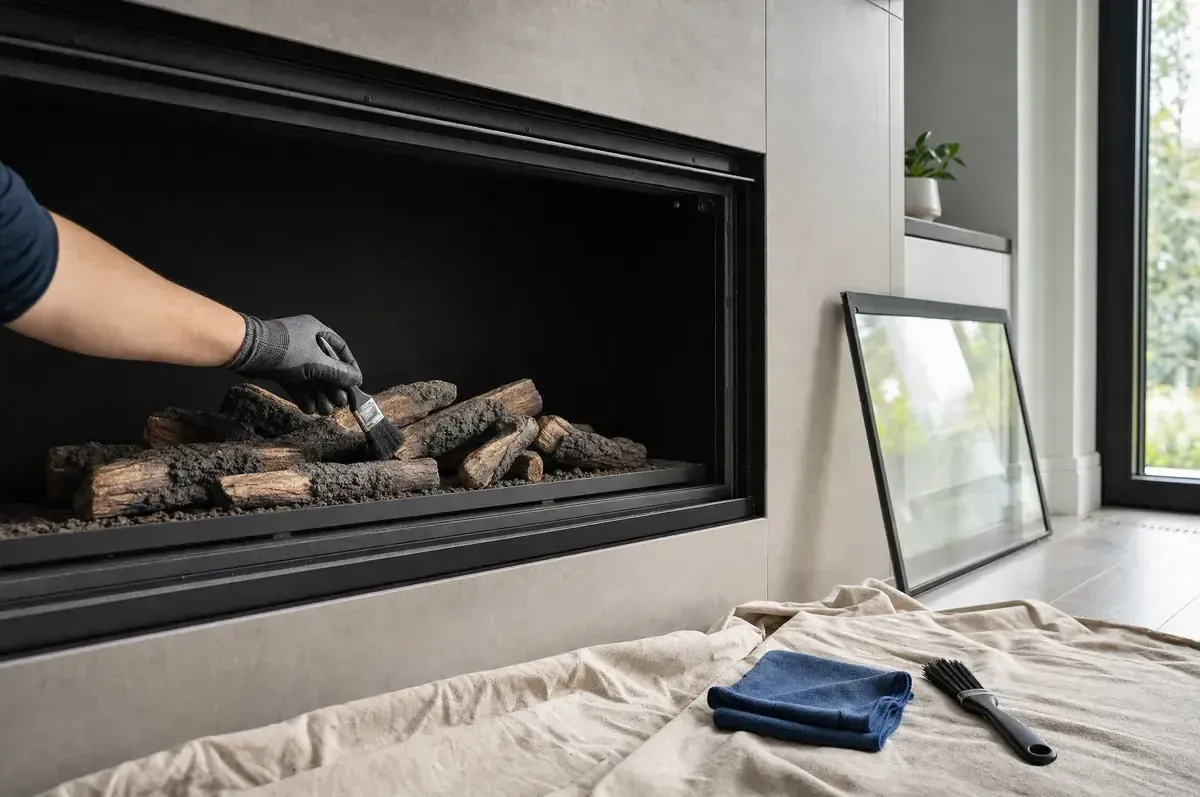
Gas fireplace servicesAnnual maintenance, pilot and valve repairs, glass and log work, plus new insert installs before the Okanagan cold sets in.
Why it matters
A gas fireplace needs annual maintenance to run safely, to prevent carbon monoxide buildup, and to keep its warranty coverage. Most of them run hard all winter and then sit untouched all summer, which is when dust, debris and a drifting pilot flame start causing trouble. One visit a year keeps it dependable.
What we check
- Glass and gasket: cleaned, inspected and resealed so the seal stays tight.
- Burner and logs: cleaned and set back in their correct positions.
- Pilot or ignition: tested so the unit lights reliably every time.
- Venting: checked for blockage, corrosion and proper draft.
- Gas pressure: measured and adjusted to the manufacturer's spec.
- Carbon monoxide: tested around the unit before we leave.
Good to know
Sooty glass, a lazy yellow flame, or a pilot that will not stay lit all mean the unit is overdue. So does any gas smell when it fires up. Book the service in the fall and you are not waiting on parts during the first cold snap.
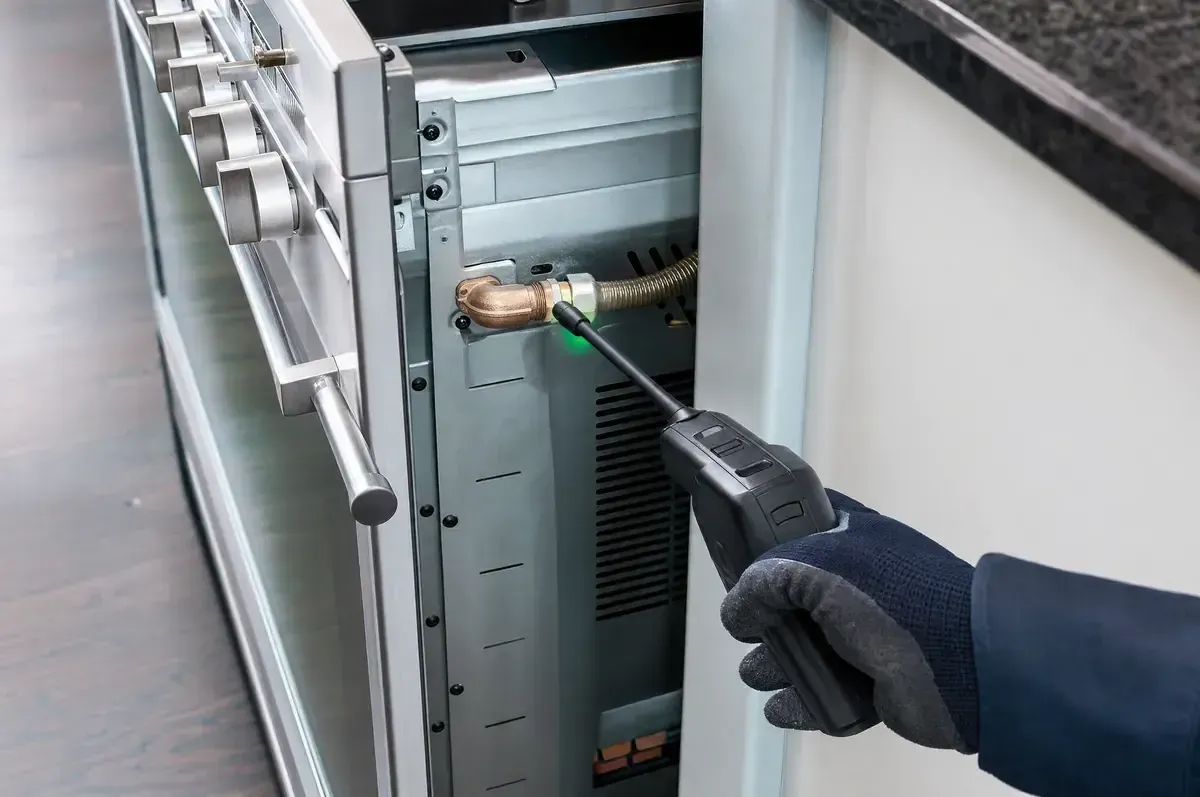
Gas leak detection and repairIf you smell gas, get everyone out and call from outside. We locate the leak, isolate the line, and repair it before anything is relit.
If you smell gas
Natural gas has no smell of its own. The rotten egg odor you notice is added on purpose so a leak is easy to catch. Treat any gas smell, or hissing near a line, as a leak until someone confirms otherwise.
- Leave the building right away and take everyone with you.
- Do not touch light switches, appliances or phones while you are inside.
- Do not relight a pilot and do not start a vehicle in the garage.
- From outside, call FortisBC's emergency line at 1-800-663-9911, then call us.
How we find it
- Electronic detectors sweep the lines, joints and appliance connections.
- Leak solution on the fittings shows bubbles at the exact spot.
- Pressure tests confirm whether a line holds, before and after the repair.
- We isolate the section, repair or replace it, then test it again.
After the repair
Nothing gets relit until the line holds pressure and every appliance checks out. We also look at what caused it, whether that is corrosion, a line bumped in the garage, or a connector past its useful life, so the same fitting is not back on your list next winter.
Part 6 of 7
Water Heaters
Hot water is easy to take for granted until the morning it runs out.
8 to 12years
Typical life of a traditional tank. What you pay for at the top of the range is thicker steel, a brass drain valve and a better anode.
Years of service
Hard Okanagan water leaves sediment in the tank, so a yearly flush is what gets you to the top of the range.
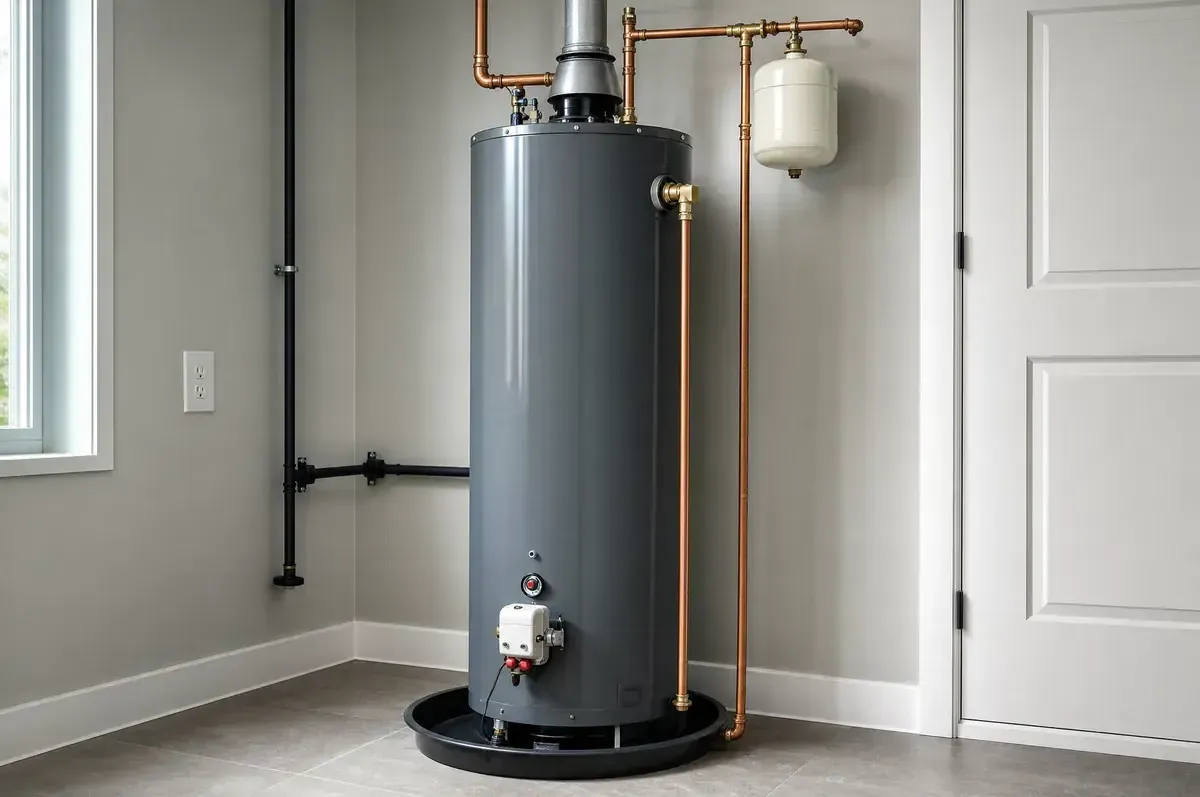
Tank water heater installation and repairGas and electric storage tanks sized, installed and vented properly, plus a straight answer on which quality tier is worth paying for.
How a tank works for you
A traditional tank stores 20 to 80 gallons, so you have a large volume of hot water ready to go and you pay much less to install it. The trade-off is standby heat loss, because the tank keeps that water hot around the clock, and it runs cold once you empty it. Typical life is 8 to 12 years.
Quality tiers
- Good, retail: About a 6 year warranty, standard steel, a plastic drain valve and an aluminum anode rod.
- Retail lifespan: Roughly 10 years, and shorter in hard water if the maintenance gets skipped.
- Better, supply house: A 10 year warranty, thicker steel, a brass drain valve, better glass lining, magnesium or powered anode.
- Supply house lifespan: 12 to 15 years or more, with sturdier connections, sold through plumbing supply houses.
- Best: High-efficiency and hybrid tanks sit above both, costing more up front and less to run.
What we check before we quote
- How many people, bathrooms and appliances pull hot water at the same time
- Whether the venting and the electrical circuit suit the tank you want
- Incoming water pressure, because pressure over 80 psi is hard on a tank and its fittings
- Whether the drain valve and anode rod can be serviced later without a fight
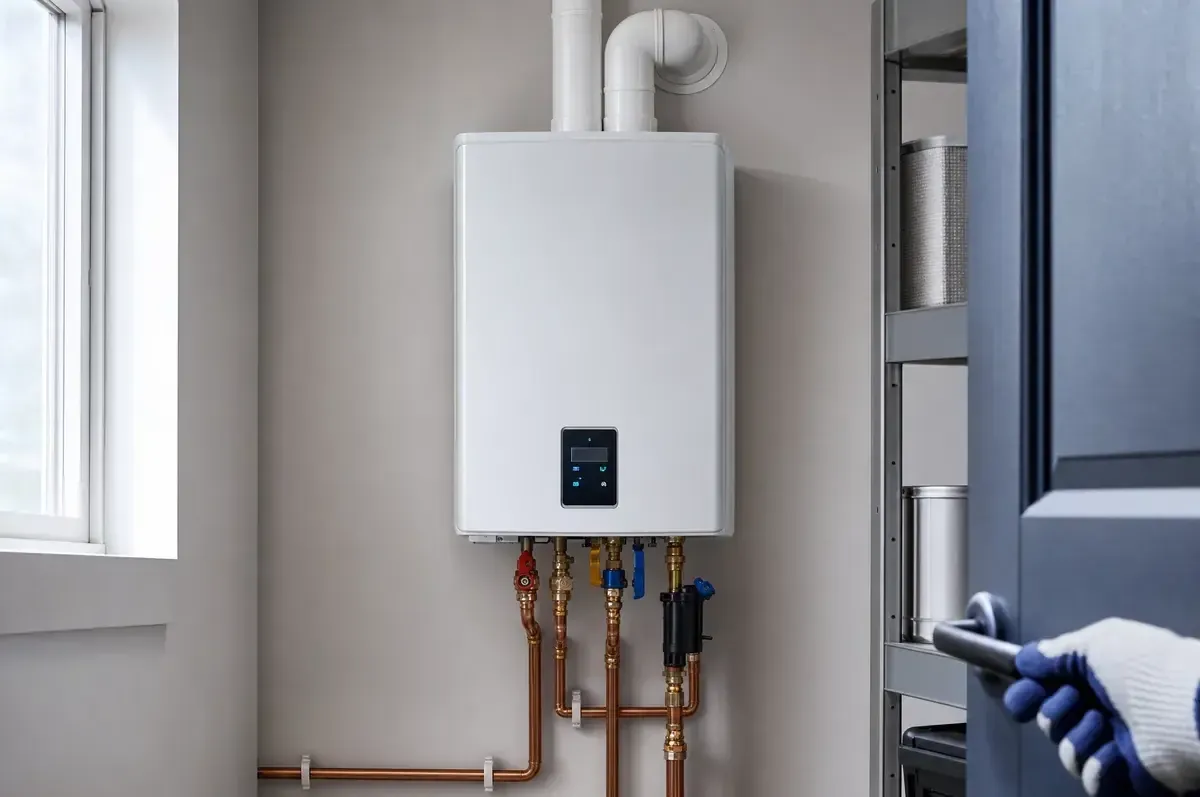
Tankless water heater servicesContinuous hot water in a smaller footprint, with the gas sizing, venting and descaling plan a tankless retrofit actually needs.
Tank vs tankless
- Supply: Continuous hot water as long as flow rates are managed, instead of a large stored volume.
- Efficiency: A tankless only fires when water moves, so there is no standby heat loss.
- Lifespan: 15 to 20 years or more, against 8 to 12 for a traditional tank.
- Upfront cost: Higher equipment price, and a retrofit often needs a gas line or electrical panel upgrade.
- Maintenance: Annual descaling, where a tank wants flushing and anode rod checks.
Quality tiers
- Non-condensing: Around 80 to 85% efficient, roughly 0.81 to 0.82 UEF, needs stainless category III venting.
- Non-condensing trade-off: Cheaper unit, pricier install, 10 to 15 years, and scale-prone in hard water.
- Condensing: 92 to 96% or better, up to 0.96 UEF, vented in PVC, CPVC or polypropylene.
- Condensing trade-off: More for the unit, less on the monthly gas bill, and it may qualify for rebates.
- Premium: Up to 0.96 to 0.98 UEF, dual stainless heat exchangers, built-in recirculation, Wi-Fi diagnostics, extended warranties.
- Premium fit: Flow up to 11.2 GPM for four or more fixtures, strong on cold groundwater, best for multi-bath homes.
Good to know
A tankless is only as good as its install. We confirm the gas supply and the venting path before we quote, not after the old tank is on the truck. We also set the descaling interval with you at handover, because skipped maintenance can void the warranty.
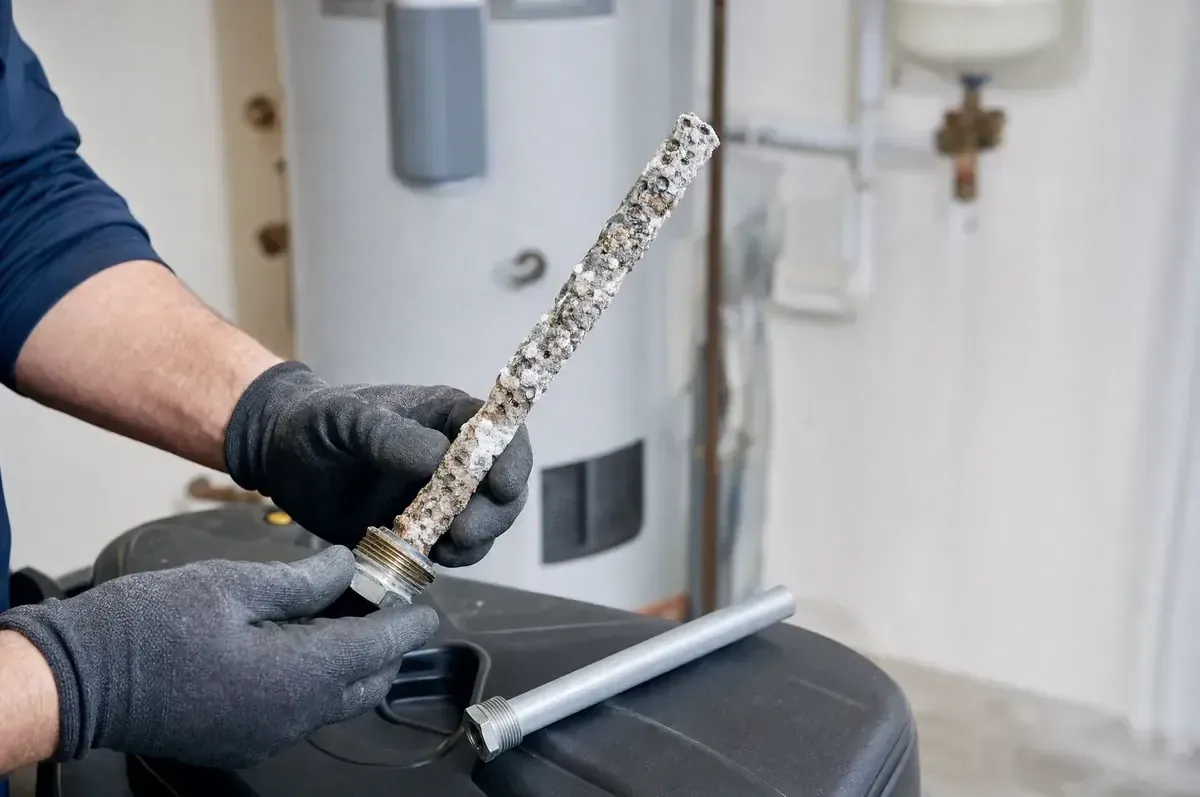
Water heater maintenanceA yearly service that flushes sediment, tests the safety valves and checks the anode rod, which is also what keeps your warranty valid.
What's included
- Flush the sediment out of the bottom of the tank
- Test the T and P relief valve, the tank's main safety device
- Inspect the anode rod, the sacrificial part that corrodes so the tank does not
- Check the temperature setting so you get hot water without a scald risk
- Check the fittings, valves and the base for leaks
- Test the safety features and controls before we sign off
Why it matters
Most manufacturers want the maintenance done to keep the warranty valid, so skipping it can cost you the tank twice. Okanagan water is hard, and sediment builds up faster here than it does in soft water areas, which is why we push the yearly visit rather than waiting for a symptom.
Good to know
- The anode rod gets inspected every few years, not on every visit
- A tankless gets an annual descale instead of a flush
- We leave you a record of what we found, which helps on a warranty claim
Part 7 of 7
Maintenance
One visit a year catches the small things while they are still small.
2visits
Cooling checked in the spring, heating checked in the fall, so nothing fails on the first hot afternoon or the first minus 20 morning.
January to December
By the first heat warning every HVAC company in the valley is running flat out.
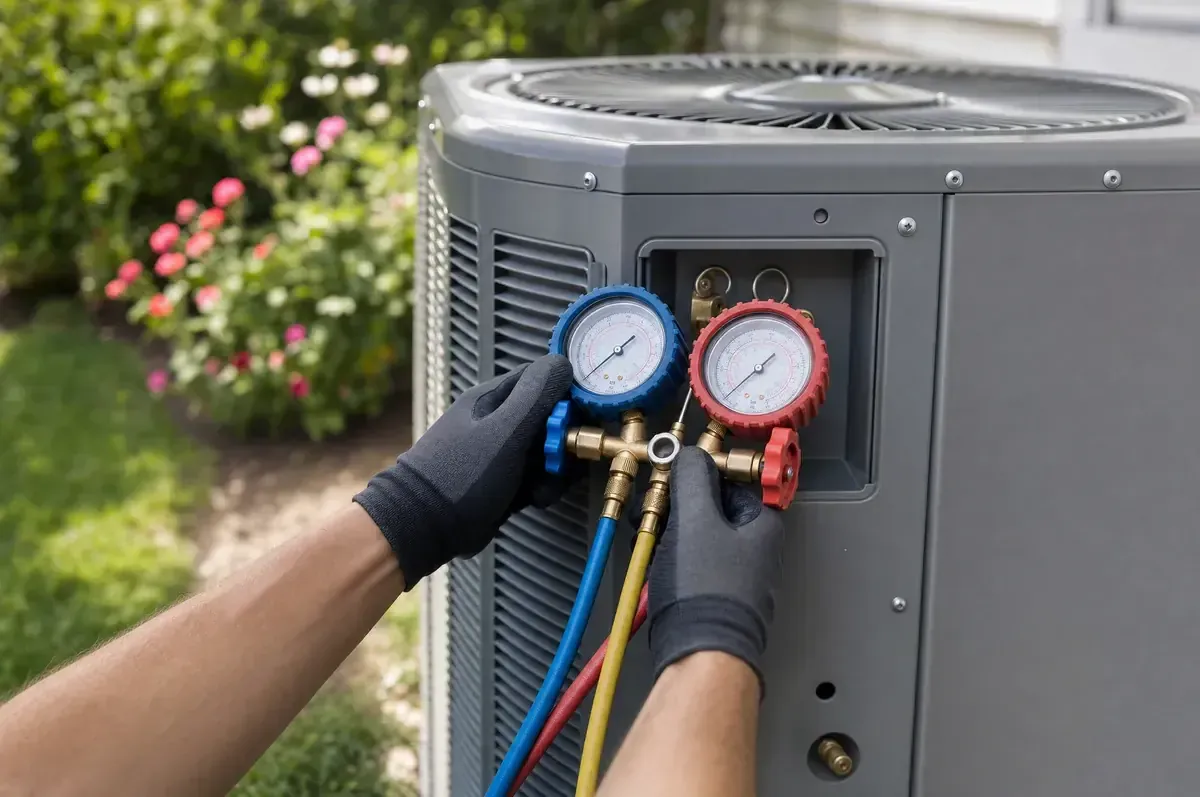
Seasonal HVAC tune-upsCooling checked in the spring, heating checked in the fall, so nothing fails on the first hot afternoon or the first minus 20 morning.
Spring visit, cooling
- Filter and airflow: we change the filter and check that vents and registers are open and clear.
- Coils and fins: outdoor coils and fins cleaned, debris cleared away from the condenser cabinet.
- Drain line: the condensate drain gets cleared so it does not back up mid summer.
- Charge and electrical: refrigerant pressure, unit level and voltage all checked and recorded.
Fall visit, heating
- Combustion and heat exchanger: tested and cleaned so the furnace burns clean and vents safely.
- Burners and flame sensor: cleaned so the furnace lights on the first try.
- Carbon monoxide test: we test for CO and confirm the venting is doing its job.
- Gas and electrical: gas components and pressure verified, plus a safety inspection and voltage check.
Why the timing matters
In the Okanagan your equipment gets tested by the weather, not by you. The first hot July afternoon is a bad time to learn the AC is low on charge, and the first minus 20 morning is a bad time to learn the furnace will not light. We book ahead of both.
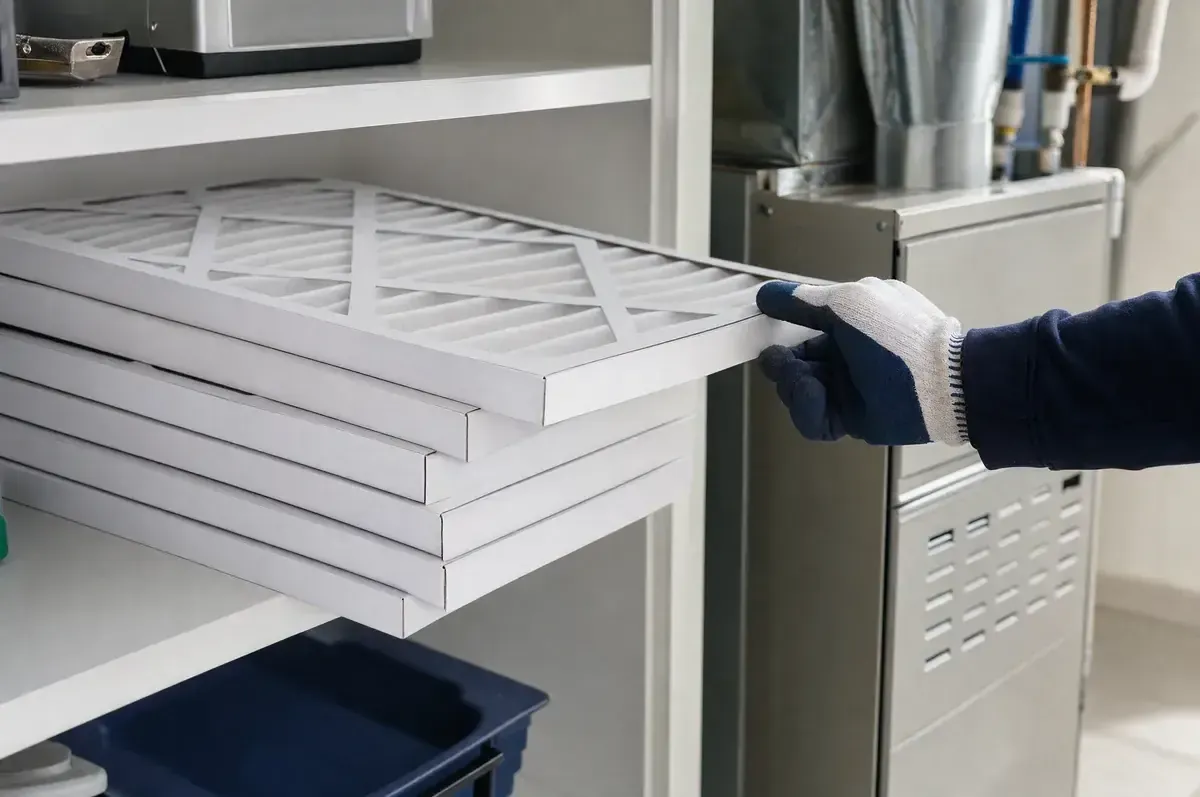
Filter replacement programsA dirty filter is the most common cause of AC problems. We keep the right one on hand and change it before it chokes your airflow.
Why the filter matters
A dirty air filter is the most common cause of home air conditioner problems. It restricts airflow and cuts cooling efficiency, and the same restriction makes your furnace work harder all winter. Most filters need changing every 30 to 90 days.
How a program works
- Right size, right rating: we record what your equipment takes so nobody guesses at the store.
- On a schedule: the filter gets changed on the visit instead of sitting in a closet.
- Reminders or drop-offs: ask us how it works and we will set an interval that fits your home.
What shortens filter life
- Pets: shedding and dander push you toward the 30 day end of the range.
- Smoke: households with smokers load a filter faster than the label suggests.
- Wildfire season: Okanagan smoke days fill a filter quickly, so check it more often.
- Renovations: drywall dust will clog a filter in days, not months.
Ask your technician
Things homeowners often miss
The things we notice on a service call that are easy to look after while we are already in your home.
- 01
Grey plastic water pipes (Poly-B)
Okanagan homes built from the late 1970s into the mid 1990s often have it, and many insurers now limit what they cover on a water claim.
Learn more - 02
The pressure reducing valve on your main water line
Weak showers, banging pipes and fixtures that keep failing usually trace back to this one small valve, so ask to have your pressure measured.
Learn more - 03
A furnace and an air conditioner of the same age
They tend to wear out around the same time, so it is worth asking whether to plan for both instead of doing the work twice.
Learn more - 04
Yearly service on a gas fireplace
Almost nobody thinks about it, but the pilot, the venting and the glass all need a look once a year.
Learn more - 05
A water heater flush and the anode rod
Hard Okanagan water leaves sediment in the tank and wears the rod out quietly, and both are easy to handle during a regular visit.
Learn more - 06
A fresh filter every 30 to 90 days
A loaded filter makes your system work harder and pushes more dust through the house, so check yours once a month.
Learn more
Not sure what your home needs?
Tell us what you are noticing and we will walk you through it, or send a technician out to take a look.